

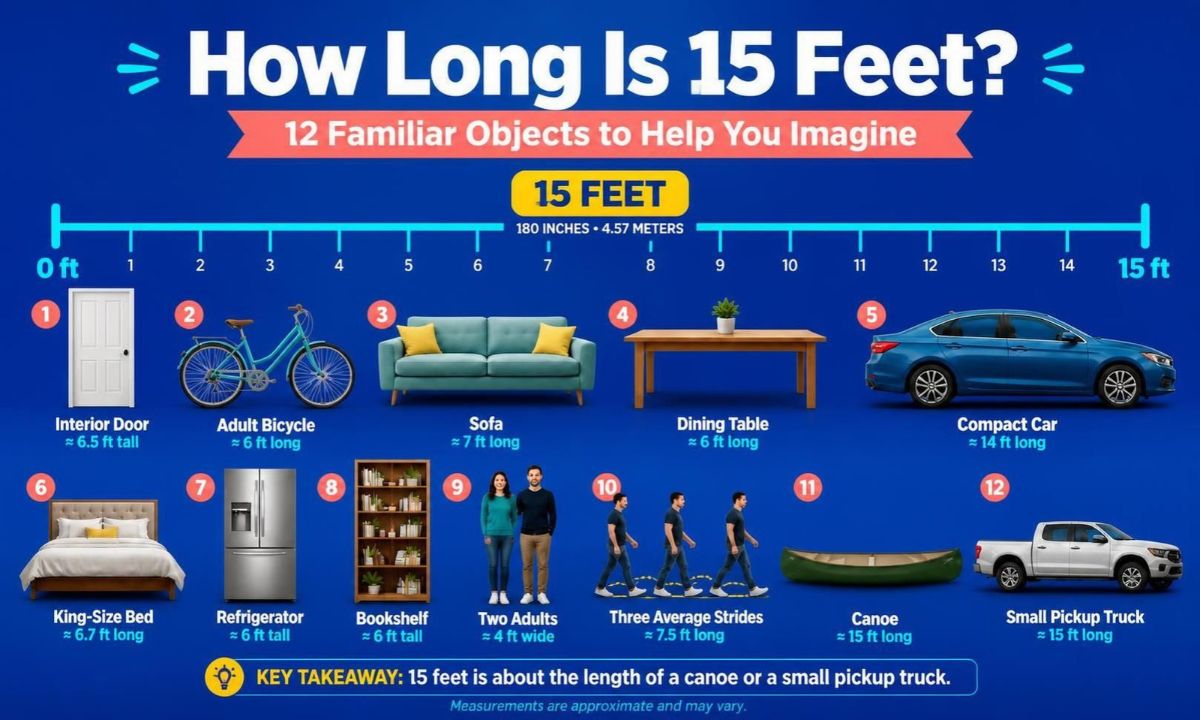
Fifteen feet is a length that can be difficult to picture until you compare it with things you see every day. It is longer than most cars, taller than a one-story room, and about the length of a large recreational vehicle. If you are measuring a room, planning a home project, checking furniture dimensions, or simply curious about this measurement, familiar objects can make it much easier to understand.
The good news is that you do not need a measuring tape to get a general idea of 15 feet. Everyday items, such as cars, ladders, furniture, and household structures, provide useful comparisons. Once you know how these objects relate to 15 feet, you can estimate this distance more confidently.
In this guide, you will learn exactly how long 15 feet is, see its equivalent measurements, and explore 12 familiar objects that help you visualize this length.
What Does 15 Feet Mean?
15 feet is a unit of length equal to 180 inches, 5 yards, or approximately 4.57 meters. It represents a distance of 15 standard feet placed end to end. You can use this measurement to describe the length, height, or width of an object or space.
How Long Is 15 Feet in Different Measurements?
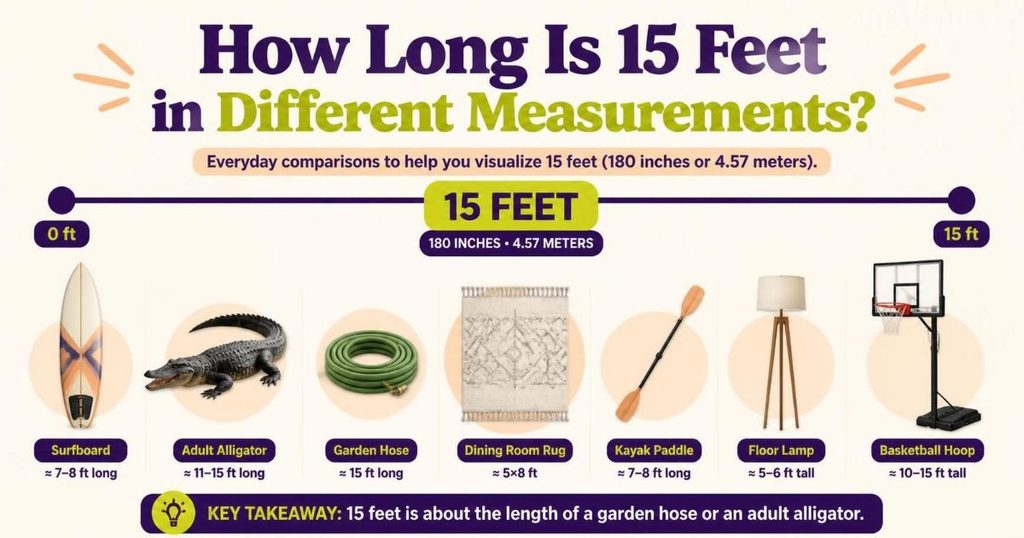
Fifteen feet is easy to convert into other measurement units. These conversions are useful when reading international product dimensions, measuring a room, or working on a construction project.
| Measurement unit | Equivalent |
| Feet | 15 feet |
| Inches | 180 inches |
| Yards | 5 yards |
| Meters | 4.572 meters |
| Centimeters | 457.2 cm |
| Millimeters | 4,572 mm |
| Miles | 0.00284 miles |
How Do You Calculate 15 Feet?
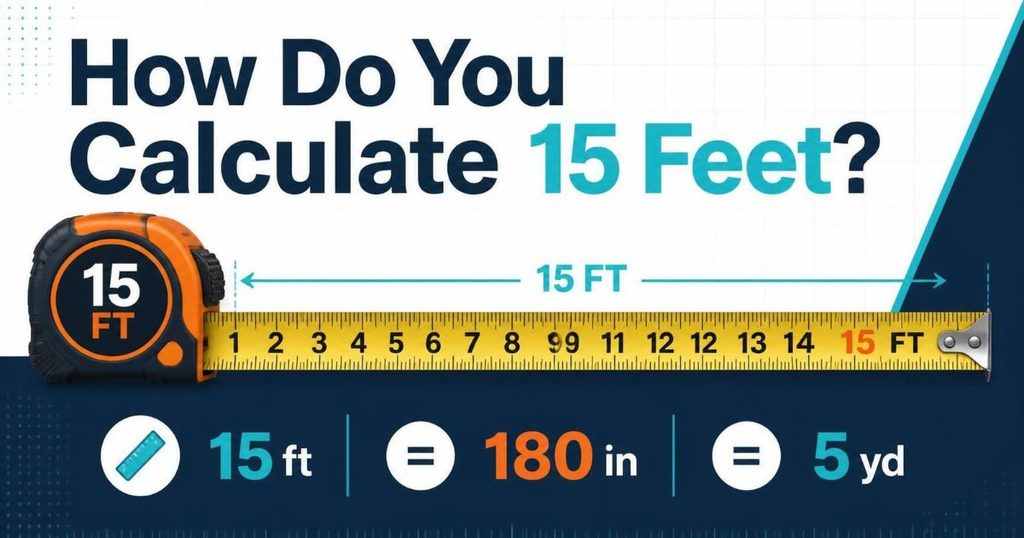
You can calculate 15 feet in other units with simple multiplication.
- Feet to inches: 15 × 12 = 180 inches.
- Feet to yards: 15 ÷ 3 = 5 yards.
- Feet to meters: 15 × 0.3048 = 4.572 meters.
- Feet to centimeters: 15 × 30.48 = 457.2 centimeters.
For example, if you have a 15-foot-long room, its length is exactly 180 inches from one end to the other.
12 Familiar Objects That Measure About 15 Feet Long
The easiest way to understand 15 feet is to compare it with familiar objects. Some examples below are close to 15 feet, while others can be purchased in an exact 15-foot size.
1. A Honda Civic
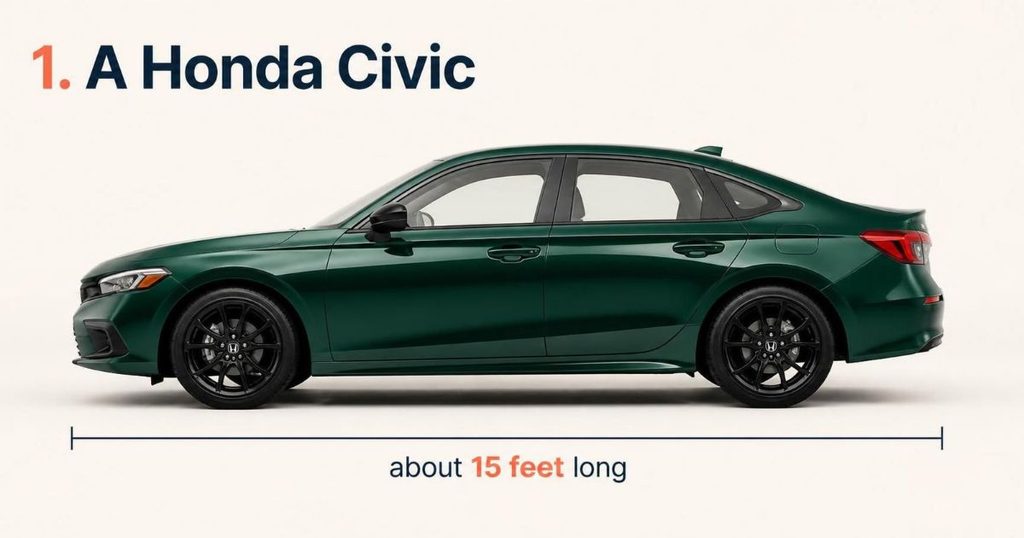
A Honda Civic is one of the easiest ways to picture a length close to 15 feet. Many recent Civic sedan models measure approximately 14.9 feet from the front bumper to the rear bumper.
Imagine standing beside a parked Civic and looking from one end to the other. That distance is almost exactly 15 feet.
This comparison is useful because most people have seen a compact sedan in a parking lot, driveway, or on a busy road. You can use a similar-sized car to estimate 15 feet without needing a measuring tape.
Why it helps: A compact sedan provides a familiar real-world reference for understanding a 15-foot horizontal distance.
2. A 15-Foot Canoe

Many recreational canoes measure between 14 and 16 feet long. A 15-foot canoe sits right in the middle of this range.
Imagine a canoe resting beside a lake. Its narrow body stretches from the pointed front end to the back. The entire distance is close to 15 feet.
Canoes of this size are commonly used for recreational paddling, fishing, and outdoor adventures. Their length also makes them a helpful comparison when trying to picture a long object.
Why it helps: You can imagine the full length of a canoe stretched across the ground to understand 15 feet.
3. Two Christmas Trees Stacked End to End

A full-size Christmas tree can stand around 7 to 7.5 feet tall. Imagine two trees of approximately the same height placed one above the other.
Their combined height would be close to 15 feet.
You can also picture this comparison by imagining two Christmas trees standing next to each other. Although they do not create a 15-foot horizontal length, their combined height gives you a good idea of the measurement.
This example is especially helpful during the holiday season when large artificial and natural Christmas trees are easy to find.
Why it helps: Two trees measuring approximately 7.5 feet each give you a simple visual reference for 15 feet.
4. A Large Backyard Trampoline
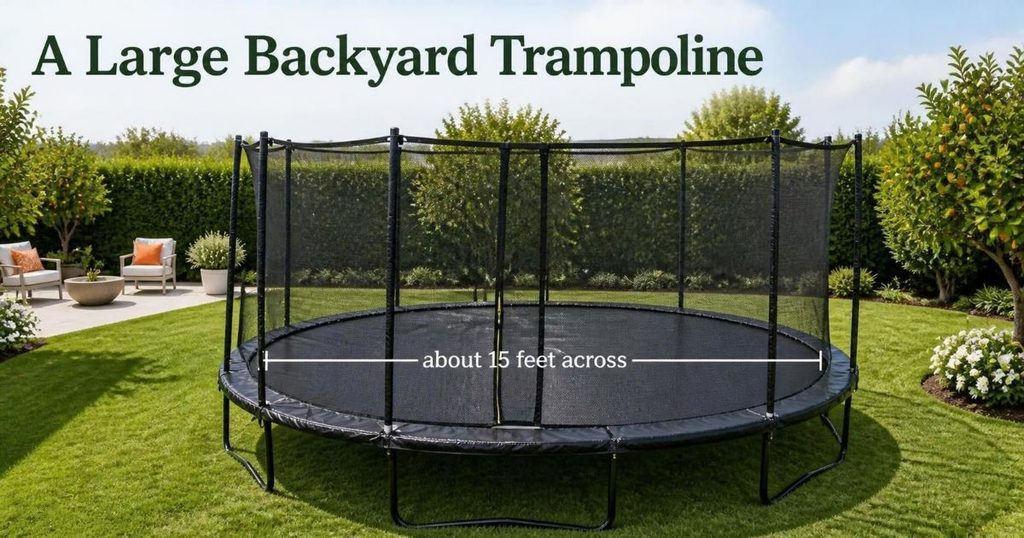
Diameter: 15 feet for a 15-foot model
A 15-foot backyard trampoline is another excellent example. Some residential trampolines are sold with a 15-foot diameter, measured straight across the circular jumping area through its center.
Picture standing at one edge of the trampoline while another person stands directly opposite you. The distance between you is 15 feet.
This comparison is useful because the circular shape makes the measurement easy to understand. You can see the full distance across the jumping surface.
Keep in mind that the advertised diameter and the overall outside dimensions may differ slightly depending on the frame and safety enclosure.
Why it helps: A trampoline with a 15-foot diameter gives you an actual 15-foot measurement.
5. Three Park Benches Placed End to End
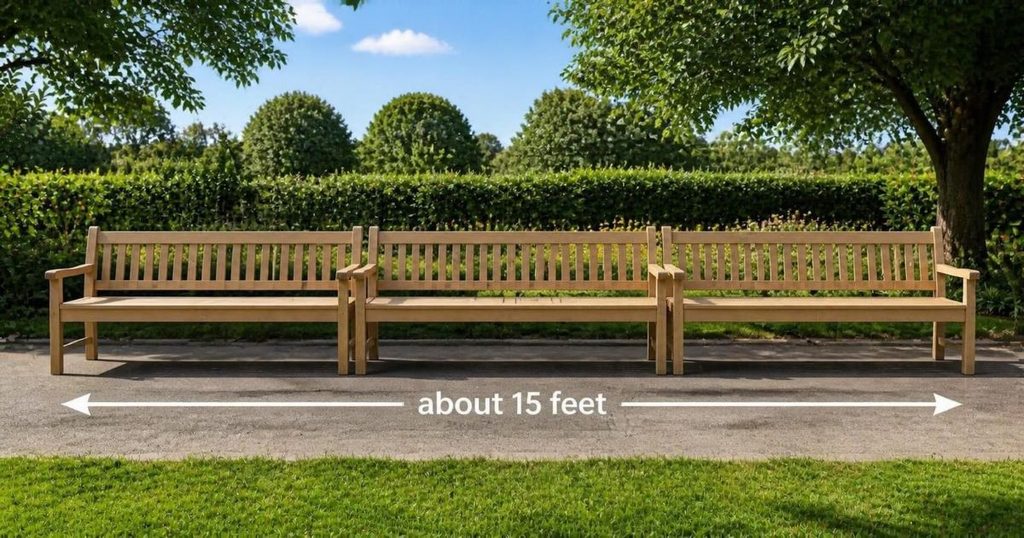
Combined length: approximately 15 feet
Think about the benches you see in public parks, gardens, and school playgrounds. Many outdoor benches are around 5 feet long, although their dimensions vary by design.
Place three benches in a straight line, with each one measuring approximately 5 feet. Together, they cover around 15 feet.
This is a simple comparison because benches are easy to recognize. You can imagine walking from the first bench to the third and covering the entire distance.
It is also a practical example for people planning outdoor seating areas or arranging furniture in a public space.
Why it helps: Three benches measuring about 5 feet each create a combined length of approximately 15 feet.
6. Three Adult Bicycles

Combined length: approximately 15 feet
An adult bicycle is generally around 5 feet long, depending on its frame, wheel size, and design. If you place three similarly sized bicycles end to end, their combined length can reach approximately 15 feet.
Imagine three bicycles lined up in a garage or outside a bicycle shop. The first bicycle covers about 5 feet, the second adds another 5 feet, and the third completes the remaining distance.
This example makes sense for people who enjoy cycling or have bicycles stored at home.
Remember that mountain bikes, road bikes, and children’s bicycles have different dimensions, so the total length will depend on the models you use.
Why it helps: Three bicycles of approximately equal length give you a familiar way to visualize 15 feet.
7. A 15-Foot Extension Cord
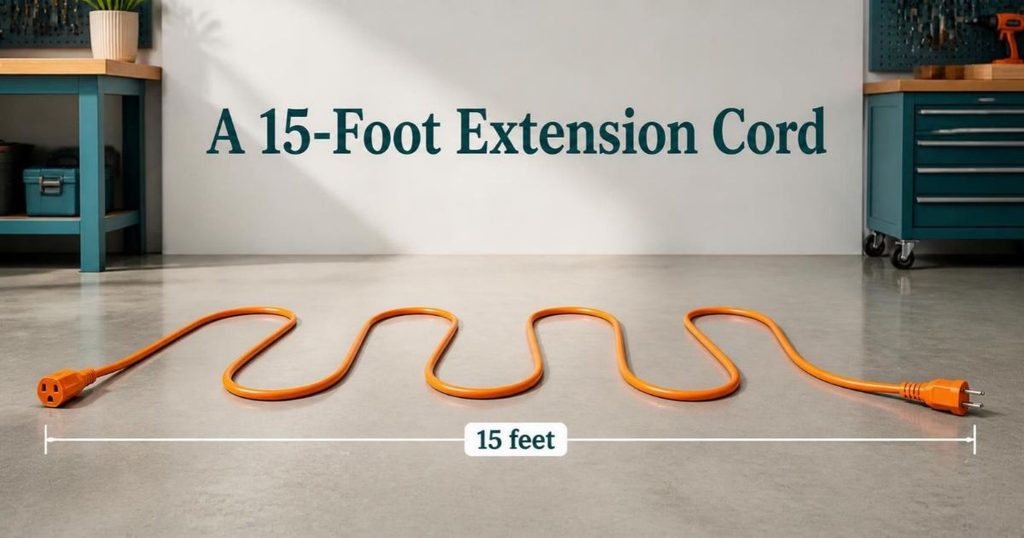
An extension cord is a practical household item that can help you understand this measurement. Many extension cords are available in different lengths, including 15 feet.
Imagine stretching a 15-foot cord across your living room floor. If you place one end beside a wall and extend the other end in a straight line, you will have a distance of 15 feet.
You might use this length when connecting an electrical device that sits some distance away from an outlet.
Unlike approximate comparisons, a cord labeled 15 feet is designed to provide that stated length. Just remember that a coiled cord does not show its full length until you stretch it out.
Why it helps: It is an everyday product that can provide an exact 15-foot reference.
8. A Small Fishing Boat

Many small fishing boats are close to 15 feet long. Aluminum fishing boats, in particular, are available in different sizes around this measurement.
Imagine looking at a fishing boat from the side. Its length runs from the bow at the front to the stern at the back.
A 15-foot boat gives you a useful picture of how much space this measurement covers. It is longer than a typical sofa and close to the length of a compact car.
People often use boats of this size for freshwater fishing and recreational activities.
Why it helps: A small fishing boat provides a clear example of a long object measuring approximately 15 feet.
9. A Medium Utility Trailer
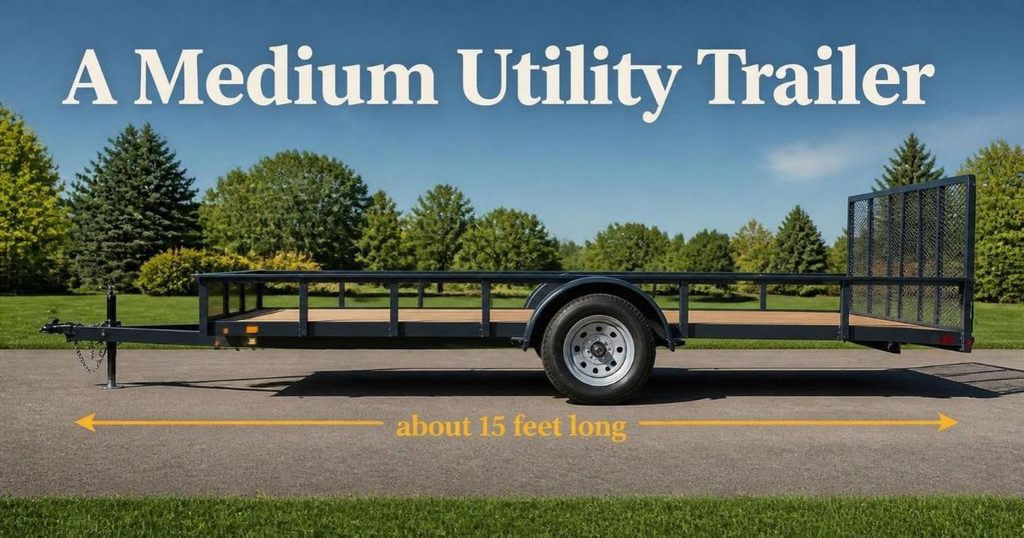
Utility trailers are used to transport furniture, gardening equipment, building supplies, and other heavy items. Some medium-sized models have a bed measuring close to 15 feet.
Picture a trailer attached to the back of a pickup truck. Its cargo bed stretches behind the vehicle and provides enough room for large items.
A 15-foot trailer is a useful comparison because you can see its full length when it is parked.
Be careful when comparing trailer dimensions. Manufacturers may list the cargo bed length separately from the overall length, which includes the hitch.
Why it helps: A utility trailer with a 15-foot cargo bed offers a practical example of this measurement.
10. Five Yardsticks Placed Toget
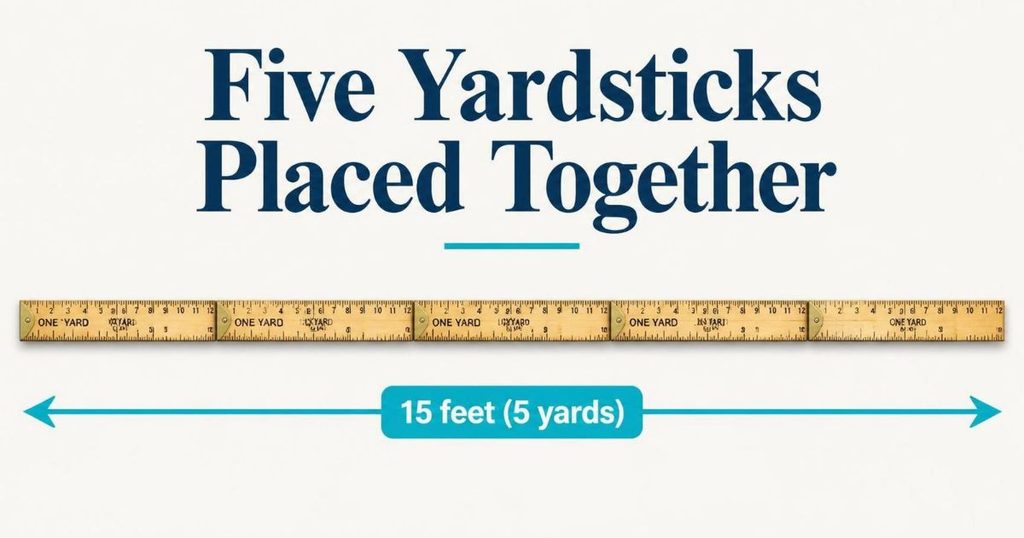
A yardstick is a measuring tool that is exactly 3 feet long. Since 15 feet equals 5 yards, five yardsticks placed end to end create an exact 15-foot line.
The calculation is simple:
- First yardstick: 3 feet.
- Second yardstick: 3 feet.
- Third yardstick: 3 feet.
- Fourth yardstick: 3 feet.
- Fifth yardstick: 3 feet.
Total: 15 feet.
This is one of the most accurate ways to visualize the measurement because yardsticks are made for measuring and have a fixed length.
Why it helps: Five standard yardsticks provide an exact measurement rather than an estimate.
11. A Two-Car Garage Door
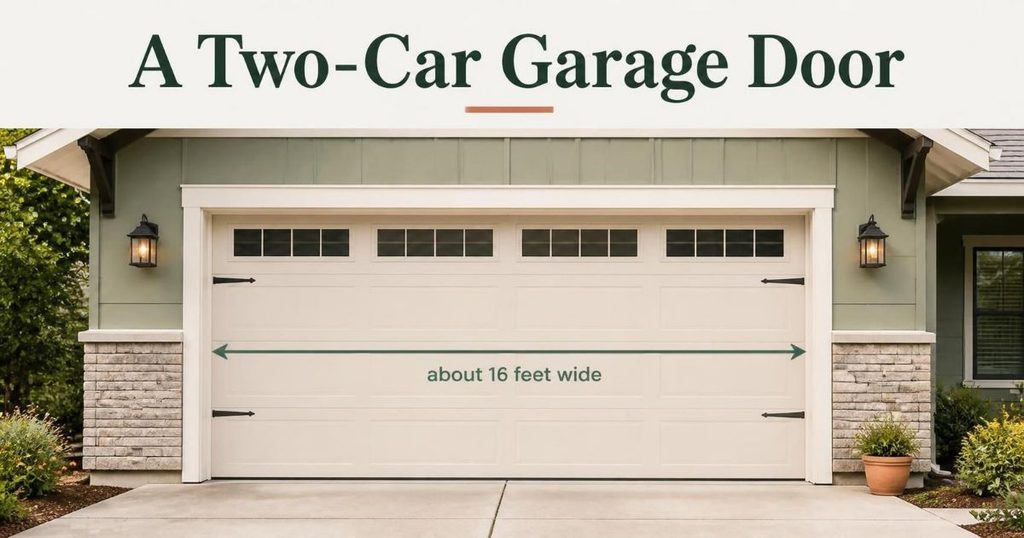
A double garage door is another familiar structure that can help you picture 15 feet. Many residential two-car garage doors have widths around 15 or 16 feet.
Imagine standing outside a house and looking directly at its garage entrance. The opening stretches across a large portion of the front wall.
A garage door close to 15 feet wide gives you a good idea of how much space this measurement covers horizontally.
Not every double garage door has the same dimensions. Some are wider or narrower, depending on the home design and available parking space.
Why it helps: A double garage door provides a familiar reference for visualizing a distance of around 15 feet.
12. A 15-Foot Garden Hose
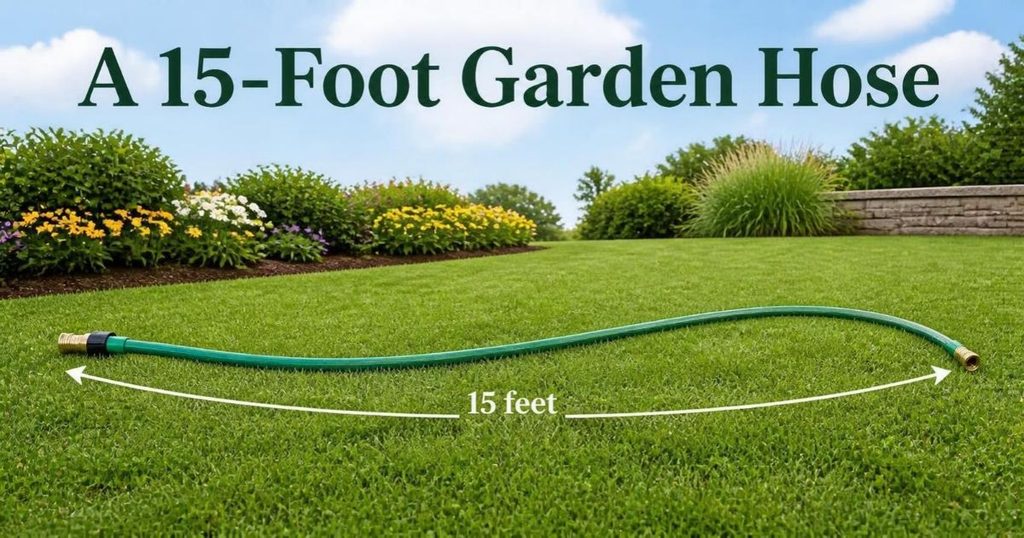
A garden hose is another household item that makes 15 feet easier to understand. Garden hoses come in many different lengths, and a 15-foot option provides a direct comparison.
Imagine stretching the hose from one side of your yard to another. A straight, fully extended 15-foot hose covers the same distance as 180 inches.
This is particularly useful when planning a small garden, watering plants, or checking whether a hose can reach a particular outdoor area.
Keep in mind that a hose sold in a longer size can be difficult to judge when it is curled into a coil.
Why it helps: A garden hose labeled 15 feet gives you an exact length that you can compare with other household spaces.
Read Also: How Many Steps Are in a Mile
Quick Comparison: 12 Things That Help You Visualize 15 Feet
Here is a quick summary of the examples discussed above.
| Familiar object | Approximate measurement |
| Honda Civic | 14.9 feet |
| Recreational canoe | 14 to 16 feet |
| Two Christmas trees | 15 feet combined |
| Backyard trampoline | 15 feet across |
| Three park benches | 15 feet combined |
| Three adult bicycles | 15 feet combined |
| Extension cord | 15 feet |
| Small fishing boat | 14 to 16 feet |
| Utility trailer | 12 to 15 feet |
| Five yardsticks | Exactly 15 feet |
| Double garage door | 15 to 16 feet |
| Garden hose | 15 feet |
Note: These are visual comparisons, not universal dimensions. Actual sizes depend on the product, manufacturer, model, and design.
What Does 15 Feet Look Like in Real Life?
Fifteen feet is approximately the length of a compact car. If you do not have a car nearby, you can use five yardsticks or a 15-foot garden hose to understand the distance.
Here are a few simple ways to picture it:
- Walking distance: About five to six comfortable adult steps, depending on stride length.
- Across a room: Imagine a large room with one wall measuring 15 feet.
- In a backyard: Picture a 15-foot trampoline viewed straight across its center.
- Using measuring tools: Place five 3-foot yardsticks end to end.
- Using vehicles: Look at a compact sedan from its front bumper to its rear bumper.
These comparisons help you understand the measurement without needing to memorize conversions.
How Long Does It Take to Walk 15 Feet?
Walking 15 feet usually takes around 5 to 7 seconds at a comfortable walking pace. The exact time depends on your stride, walking speed, and whether you need to avoid obstacles.
For an average adult, 15 feet is a short distance. You might cover it by walking across part of a living room or moving from a doorway to a nearby piece of furniture.
This makes 15 feet a useful measurement for estimating small distances around your home, workplace, or outdoor space.
Where Is a 15-Foot Measurement Useful?
You may come across a 15-foot measurement in several everyday situations. Understanding its size can help you plan spaces and choose products more confidently.
Home Improvement and Room Planning
Fifteen feet can describe the length or width of a room, garage opening, patio, or outdoor area. If you are buying furniture, knowing this measurement helps you decide whether a particular item will fit.
For example, a 15-foot wall offers plenty of room for arranging a sofa, television, and other living room furniture.
Gardening and Outdoor Projects
A 15-foot measurement is useful when planning garden layouts, fences, walkways, and watering systems.
If you have a 15-foot garden hose, you can estimate whether it will reach the plants you want to water.
Construction and DIY Projects
Builders and homeowners use feet when measuring lumber, walls, flooring, and other materials.
Knowing that 15 feet equals 180 inches makes it easier to work with different measuring tools and construction plans.
Vehicle and Storage Planning
A compact car can be close to 15 feet long. This comparison helps when estimating garage space, driveway dimensions, and storage areas.
Remember that you should measure your actual vehicle before deciding whether it will fit in a particular space.
Frequently Asked Questions
Is 15 feet considered long?
Yes, 15 feet is a considerable length for many household objects. It is close to the length of a compact car and longer than most standard sofas.
How many inches are in 15 feet?
There are exactly 180 inches in 15 feet. Since one foot contains 12 inches, multiply 15 by 12 to get 180 inches.
Is 15 feet the same as 5 yards?
Yes. Fifteen feet equals exactly 5 yards because one yard contains 3 feet. Dividing 15 by 3 gives you 5 yards.
How many meters is 15 feet?
Fifteen feet equals 4.572 meters. You can calculate this by multiplying 15 by 0.3048, which is the number of meters in one foot.
Is a car about 15 feet long?
Many compact cars are approximately 15 feet long. For example, certain Honda Civic sedan models measure close to 14.9 feet. Actual vehicle dimensions vary by manufacturer and model year.
How can I measure 15 feet without a tape measure?
You can use five standard yardsticks placed end to end because each yardstick measures 3 feet. You can also use a 15-foot extension cord or garden hose as a reference if its labeled length is accurate.
Is 15 feet longer than a standard parking space?
Not necessarily. Many standard parking spaces are approximately 18 feet long, although their dimensions vary by location and parking design. A 15-foot distance is slightly shorter than an 18-foot parking space.
How tall is 15 feet compared with a house?
Fifteen feet is taller than the ceiling height of most ordinary residential rooms. It can be close to the combined height of two smaller room levels, depending on the building design.
Conclusion
Fifteen feet equals 180 inches, 5 yards, or 4.572 meters. Although these numbers explain the measurement, comparing it with familiar objects makes it much easier to understand. A compact car, recreational canoe, backyard trampoline, and five yardsticks are all useful examples.
Some provide approximate comparisons, while others, such as a 15-foot garden hose, offer an exact reference. Whether you are planning a home project, arranging furniture, measuring an outdoor space, or simply curious about this length, these 12 examples give you a practical way to picture 15 feet without relying entirely on numbers.

Ezra Holden is a measurement focused writer at Classy Valve, sharing practical insights on units, dimensions, conversions, calculations, and measurement concepts. With a research driven approach, Ezra focuses on clear explanations, accurate examples, and useful guidance that helps readers understand technical measurement topics with greater confidence.